

21 Sep The Life of an Idea: From a Blank Whiteboard to a Finished Project
How Great Ideas Grow from Simple Sketches into Successful Projects
Every successful business, innovative product and game-changing solution begins the same way—with a single idea. Rarely does that idea appear fully formed. Instead, it develops through conversation, brainstorming, trial and error, and countless refinements before becoming something tangible. This is why whiteboards continue to play such an important role in workplaces across New Zealand. They provide a space where ideas can evolve naturally, allowing teams to sketch concepts, organise workflows and solve problems together. Unlike static documents or digital notes hidden behind computer screens, a whiteboard encourages collaboration, visual thinking and creativity, helping ideas move from rough sketches to well-planned projects. Whether you’re working in a meeting room, classroom or office, the right visual communication tools make it easier to capture inspiration before it disappears. If you’re exploring the best solutions for your workspace, you’ll find a comprehensive range of whiteboards designed for every environment.
The journey from brainstorm to breakthrough is rarely a straight line. Great ideas are questioned, refined, reorganised and improved as different perspectives are shared. Magnetic whiteboards, glass whiteboards, planner boards and mobile whiteboards all help teams visualise information, identify opportunities and transform creative thinking into practical action. As projects grow, these workplace tools become central hubs for planning, collaboration and decision-making, ensuring everyone remains aligned with the same objectives. Throughout this guide, we’ll explore how different types of whiteboards support each stage of that journey, from the very first spark of inspiration to the successful completion of a project. If you’re looking to build more productive, collaborative workspaces, explore the innovative range available from 3D Products and discover how the right whiteboard can help turn today’s ideas into tomorrow’s achievements.
Every Great Idea Starts Somewhere
Why the best ideas often begin as rough sketches rather than finished plans
The biggest breakthroughs rarely begin with a polished presentation or a detailed project plan. More often, they start as rough sketches, quick notes and half-formed ideas that gradually take shape through discussion and experimentation. A blank whiteboard provides the perfect environment for this creative process because it removes the pressure to be perfect. Instead of worrying about formatting or creating a finished document, individuals and teams can simply focus on thinking, sharing ideas and exploring possibilities. This freedom encourages creativity and allows every contribution to become part of a much larger conversation. Whether designing a new product, planning a marketing campaign or improving internal processes, whiteboards give ideas the space they need to grow.
What makes this process so effective is the ability to see thoughts evolve in real time. Arrows connect concepts, diagrams replace lengthy explanations and priorities naturally become clearer as discussions progress. Unlike digital notes hidden on individual devices, information remains visible to everyone in the room, encouraging collaboration and helping teams build on one another’s thinking. Businesses looking to create dedicated collaboration spaces often benefit from understanding the advantages of whiteboards for every NZ office, where visual communication becomes an everyday part of innovation.
How whiteboards remove the barriers between thinking and doing
One of the greatest strengths of a whiteboard is its simplicity. There are no complicated menus, software updates or technical barriers standing between an idea and its execution. As soon as inspiration strikes, someone can walk to the board, pick up a marker and begin sketching. This immediate connection between thinking and action keeps creativity flowing while allowing ideas to develop naturally through discussion. Team members can erase, redraw and reorganise information within seconds, creating an environment where experimentation is encouraged rather than avoided.
This flexibility makes whiteboards invaluable during project planning, strategy meetings and brainstorming workshops. Instead of spending valuable time preparing digital presentations, teams can focus on solving problems together. As ideas become more refined, they naturally transition into workflows, timelines and practical action plans. Whiteboards become more than presentation tools—they become working documents that evolve alongside the project itself, helping businesses reduce confusion, improve communication and move confidently from concept to execution.
Why visual thinking unlocks creativity that laptops often can’t
Digital devices are excellent for documenting finished work, but they are not always the best tools for creating it. Laptops encourage people to think in straight lines, one page or one slide at a time. Whiteboards encourage a completely different approach by allowing ideas to spread across a large writing surface where relationships between concepts become easier to recognise. Mind maps, process diagrams, timelines and sketches can all exist together, giving teams a broader perspective that supports creative thinking and better decision-making.
Seeing information displayed visually also changes the way people interact with it. Participants naturally stand, move around the room and contribute ideas as conversations develop, creating a far more dynamic brainstorming environment than sitting behind individual screens. This physical interaction encourages greater engagement while helping everyone understand how separate ideas connect to form a complete solution. As projects become more complex, visual thinking continues to simplify communication, ensuring every member of the team understands not only what needs to be done, but also why it matters.
Turning Ideas into Plans
How magnetic whiteboards organise projects before work even begins
An idea only becomes valuable when it can be transformed into a practical plan. This is where magnetic whiteboards become one of the most effective tools in any workplace. Before a project officially begins, teams can use a magnetic whiteboard to organise objectives, identify milestones and allocate responsibilities while keeping every stage of the workflow visible. Instead of relying on scattered notes or multiple digital files, everyone works from a single visual plan that can be updated instantly as new information emerges. Magnets allow important documents, printed schedules and reference material to remain attached beside handwritten notes, creating a central planning hub where ideas evolve into structured action. This simple approach reduces confusion while improving communication across departments and project teams.
Magnetic whiteboards are equally valuable because they remain flexible throughout the planning process. As priorities change or new opportunities arise, information can be rearranged without rewriting an entire project. Teams can move milestones, adjust deadlines and reorganise workflows in seconds, allowing planning sessions to remain productive rather than becoming administrative exercises. Businesses wanting to better understand how these planning systems improve productivity can explore the advantages of magnetic whiteboards and discover why they continue to be an essential workplace tool.
Why planner boards keep teams focused on priorities and deadlines
Even the most creative ideas require structure if they are to become successful projects. Planner boards provide that structure by giving teams a clear visual overview of tasks, deadlines and responsibilities. Instead of relying on memory or lengthy project documents, everyone can see exactly what needs to happen next. Weekly planners, monthly schedules and project tracking boards make it easier to prioritise workloads, allocate resources and monitor progress without losing sight of the overall objective. This clarity helps reduce delays while ensuring important tasks receive the attention they deserve.
Planner boards also improve accountability because responsibilities remain visible throughout the life of the project. Team members know who is responsible for each task, managers can quickly identify potential bottlenecks and project timelines can be adjusted before small issues become larger problems. Whether used in a meeting room, production environment or office, planner boards encourage consistent communication while helping organisations move steadily from planning into successful execution.
How visual workflows reduce confusion and improve communication
Complex projects often involve multiple departments, changing priorities and countless individual tasks. Without a clear workflow, important information can quickly become fragmented, resulting in duplicated effort, missed deadlines and unnecessary confusion. Visual workflows solve this problem by presenting information in a format that everyone can understand at a glance. Whiteboards allow teams to map processes, draw connections between tasks and create logical sequences that simplify even the most complicated projects. When every stage of a workflow is visible, decision-making becomes faster and communication improves naturally.
Visual planning also creates greater transparency across an organisation. Employees no longer need to search through emails or multiple software platforms to understand project status because the information is displayed in one central location. Discussions become more productive, meetings become shorter and collaboration improves because everyone is working from the same visual reference point. As projects continue to evolve, the workflow can evolve alongside them, ensuring teams remain aligned while maintaining momentum from the first planning session through to final delivery.
-
 This product has multiple variants. The options may be chosen on the product page
Staff Indicator Whiteboards
Price range: $235.00 through $280.00 Excl GST -

Week Schedule Planner Whiteboard
$440.00 Excl GST
When Collaboration Creates Better Ideas
Why the best solutions are rarely created by one person alone
Some of the world’s most successful ideas may begin with one person, but they almost always become better through collaboration. Different experiences, perspectives and expertise help identify opportunities that a single individual may overlook. Whiteboards create an environment where everyone can contribute equally by making ideas visible and encouraging open discussion. Rather than presenting a finished proposal, teams can work together to question assumptions, suggest improvements and build stronger solutions from the earliest stages of a project. This collaborative approach often results in better decision-making because every idea can be explored before important commitments are made.
Visual collaboration also helps remove communication barriers between departments. Marketing teams can better understand operational challenges, project managers can clarify timelines with technical staff and leadership teams can align strategic objectives more effectively. Instead of relying on lengthy reports or email chains, ideas are shared openly in a format that everyone can understand. Businesses that invest in visual communication spaces often discover that collaboration becomes more natural, meetings become more productive and innovative thinking becomes part of everyday work rather than something reserved for occasional workshops.
How mobile whiteboards keep ideas moving across teams and workspaces
Modern workplaces are constantly evolving, and collaboration no longer happens in a single meeting room. Teams gather in project spaces, training areas, production facilities and informal collaboration zones throughout the day. Mobile whiteboards provide the flexibility to move ideas wherever they are needed, ensuring planning sessions can continue without interruption. Instead of rewriting notes onto another board or relying on photographs of previous discussions, the entire project can move with the team. This saves time while maintaining momentum as ideas develop from one meeting to the next.
Mobile whiteboards are particularly valuable for organisations that encourage cross-functional collaboration. Sales teams, designers, engineers and managers can all contribute to the same project while working in different environments, creating a continuous flow of ideas rather than isolated conversations. Businesses interested in creating more adaptable workplaces can learn more about the benefits of mobile and portable whiteboards and how they support flexible, collaborative working.
Why seeing everyone’s thoughts together improves decision-making
One of the biggest challenges in group discussions is ensuring every idea receives equal consideration. When conversations rely solely on spoken words, valuable suggestions can easily be forgotten or misunderstood. Whiteboards solve this problem by capturing every contribution in a single visual space where ideas remain visible throughout the discussion. As concepts are grouped, connected and refined, patterns begin to emerge that may not have been obvious at the beginning of the meeting. Teams can compare alternatives side by side, evaluate risks and identify the strongest path forward with greater confidence.
Visual thinking also encourages more balanced decision-making because it slows the conversation just enough for everyone to contribute. Rather than allowing the loudest voice to dominate the discussion, the whiteboard becomes the centre of attention. Team members focus on improving the ideas displayed rather than defending their own opinions, creating a more constructive and collaborative environment. By making complex information easier to understand, whiteboards help businesses reach better decisions while ensuring every project benefits from the collective knowledge and experience of the entire team.
From Planning to Progress
How project boards help teams track milestones and maintain momentum
A project only moves forward when everyone understands what has been completed, what still needs attention and what comes next. Project boards transform planning into visible progress by giving teams a central place to monitor milestones, assign responsibilities and track deadlines. Instead of relying on lengthy reports or multiple software platforms, a well-organised whiteboard allows every team member to see the current status of a project at a glance. This visibility keeps discussions focused, reduces duplicated work and helps managers identify potential delays before they become costly problems. As priorities change, tasks can be updated immediately, ensuring the workflow always reflects the current situation rather than yesterday’s plan.
Project boards are equally valuable because they encourage accountability without creating unnecessary complexity. Everyone knows which tasks have been completed, which activities are underway and where additional support may be required. Whether managing a product launch, coordinating maintenance schedules or planning marketing campaigns, visual project tracking creates greater confidence across the entire team. As work progresses, the whiteboard becomes a living document that records the journey from the first brainstorm through to successful completion, helping businesses maintain momentum while keeping every contributor aligned with the overall objective.
Why visual planning keeps projects moving when priorities change
No project follows its original plan from beginning to end. Client requirements evolve, deadlines shift and unexpected challenges often require teams to rethink their approach. Visual planning makes these changes easier to manage because information can be updated instantly without disrupting the entire workflow. Tasks can be moved, priorities reorganised and new ideas incorporated while everyone watches the plan evolve in real time. This flexibility helps businesses respond quickly to changing circumstances while maintaining clear communication between departments and reducing unnecessary delays.
Unlike static project documents that quickly become outdated, a whiteboard reflects the current state of the project at every moment. During planning meetings, teams can discuss different options, test alternative approaches and immediately see how changes affect the wider workflow. This dynamic approach encourages better decision-making because the consequences of each adjustment become visible before action is taken. Businesses looking to maximise these benefits often compare the advantages of wall-mounted and freestanding whiteboards to determine which planning solution best suits their workspace and the way their teams collaborate.
How presentation boards and noticeboards keep everyone informed
As projects develop, keeping everyone informed becomes just as important as creating the original plan. Presentation boards and noticeboards provide a simple yet highly effective way to communicate updates, milestones and key information without relying solely on emails or digital notifications. Important schedules, workflow diagrams, safety information and project announcements remain visible throughout the working day, ensuring employees always have access to the latest information. This continuous visibility improves communication while reducing the risk of misunderstandings that can slow project delivery.
Presentation boards also play an important role when sharing progress with clients, visitors or senior management. Instead of gathering information from multiple sources, teams can present updates clearly using visual timelines, charts and supporting documentation displayed in one organised location. Noticeboards complement this process by providing dedicated spaces for ongoing communication, allowing businesses to separate operational updates from project-specific planning. Together, these visual communication tools help maintain transparency, strengthen collaboration and ensure everyone remains focused on achieving the same successful outcome.
-
 This product has multiple variants. The options may be chosen on the product page
Mobile Whiteboard Trolley
Price range: $448.00 through $1,059.00 Excl GST -
 This product has multiple variants. The options may be chosen on the product page
Mobile Whiteboard, Pivoting – Double Sided
Price range: $682.80 through $1,402.80 Excl GST
The Final Presentation
Why great projects deserve professional presentation tools
Completing a successful project is a significant achievement, but the way those results are presented can be just as important as the work itself. Whether introducing a new product, reporting project outcomes or presenting strategic recommendations, professional presentation tools help communicate ideas with greater clarity and confidence. Whiteboards, magnetic whiteboards and presentation boards allow teams to explain complex information visually, making it easier for clients, colleagues and decision-makers to understand key messages. Diagrams, timelines, workflow maps and supporting notes can all be displayed together, creating presentations that encourage discussion rather than simply delivering information.
The quality of the presentation environment also influences how ideas are received. A clean, organised meeting room equipped with premium whiteboards and practical visual communication tools demonstrates professionalism while helping presenters remain focused on the conversation rather than the technology. Rather than relying entirely on digital slides, teams can adapt discussions in real time by adding notes, answering questions and illustrating new ideas as they emerge. This flexibility often results in more productive meetings where decisions are reached faster and every participant feels involved in the discussion.
How glass whiteboards create impressive spaces for sharing ideas
Glass whiteboards have become a popular choice for modern offices because they combine exceptional performance with contemporary design. Their smooth, non-porous writing surface resists staining and ghosting while remaining easy to clean, even after years of regular use. Beyond their practical benefits, glass whiteboards create an immediate impression of quality and professionalism that complements executive offices, boardrooms and client meeting spaces. Their sleek appearance helps create environments where important conversations, presentations and planning sessions can take place with confidence.
Glass whiteboards also encourage greater interaction during presentations because they remain visually clean throughout the discussion. Ideas can be added, refined and reorganised without distracting stains or faded marker residue affecting visibility. Businesses comparing different presentation surfaces may find it helpful to explore the range of glassboards available for workplaces that value both functionality and contemporary design. By combining outstanding durability with an elegant finish, glass whiteboards provide an ideal platform for presenting ideas that deserve to be seen clearly.
Why the journey from concept to completion is easier with the right visual tools
Every successful project follows a similar journey. It begins with a single idea, develops through collaboration, becomes organised through planning and is eventually presented as a finished outcome. Throughout every stage of that journey, visual communication tools provide the structure that keeps ideas moving forward. Whiteboards capture inspiration, magnetic planning boards organise priorities, mobile whiteboards encourage collaboration across teams and presentation boards communicate progress to stakeholders. Together, these tools create a continuous workflow that helps transform creativity into measurable results.
Perhaps the greatest advantage of visual tools is that they evolve alongside the project itself. Unlike static documents that become outdated, whiteboards adapt as priorities shift, new opportunities emerge and better solutions are discovered. They encourage discussion, simplify complex information and keep every contributor aligned with shared objectives. By supporting brainstorming, planning, communication and final presentation within the same visual environment, whiteboards become much more than office equipment—they become an essential part of the innovation process that helps great ideas successfully reach their destination.

The Best Projects Never Really End
How every finished project becomes the starting point for the next idea
Completing a project is often seen as the finish line, but in reality it marks the beginning of the next cycle of innovation. Every successful product, improved process or completed initiative creates new knowledge that inspires fresh ideas and future opportunities. Teams review what worked well, identify areas for improvement and begin asking new questions that eventually lead to the next breakthrough. Whiteboards naturally support this continuous cycle because they provide an open space where reflections, feedback and future possibilities can be captured before they are forgotten. The same board that displayed the original concept often becomes the place where the next generation of ideas begins to take shape.
This ongoing process encourages organisations to view every completed project as valuable experience rather than a final destination. Lessons learned can be recorded, successful workflows refined and new objectives outlined while the project is still fresh in everyone’s minds. Businesses that embrace this approach develop stronger planning processes, better communication and more confident decision-making over time. Instead of treating innovation as an occasional activity, they create workplaces where improvement becomes part of everyday operations and every achievement contributes to future success.
Why workplaces built around visual communication continue to innovate
The most innovative organisations rarely depend on individual talent alone. They create environments that encourage people to share ideas, challenge assumptions and solve problems together. Visual communication plays an important role in this culture by making information accessible, encouraging discussion and helping teams understand how individual contributions connect to broader business goals. Whiteboards, magnetic planning systems and collaborative workspaces create visible thinking environments where ideas are developed openly rather than remaining hidden in notebooks or computer files.
These workplaces also adapt more easily to change because information can evolve alongside new priorities. Teams can test different approaches, compare alternatives and adjust project plans without losing sight of the bigger picture. Organisations that invest in visual collaboration tools often discover that creativity becomes more consistent because employees feel comfortable contributing ideas throughout every stage of a project. Innovation becomes less dependent on formal meetings and more closely integrated into the normal rhythm of daily work.
Creating a culture where every idea has room to grow
Creating a culture of innovation is not about having the latest technology or the largest office. It is about giving people the confidence and the tools to think creatively, communicate openly and develop ideas together. Whiteboards provide one of the simplest ways to encourage this behaviour because they invite participation from everyone in the room. A blank writing surface carries no expectations, making it easier for employees to sketch concepts, ask questions and explore possibilities without worrying about creating a perfect solution from the outset. Over time, this openness strengthens collaboration and builds trust across the entire organisation.
The right environment also ensures that valuable ideas are not lost as projects become more complex. Practical visual communication tools help teams organise information, prioritise actions and maintain momentum from the earliest brainstorming session through to the final presentation. Organisations wanting to build collaborative workplaces can also explore the practical solutions available through durable NZ whiteboards and noticeboards, supporting long-term innovation while creating spaces where every great idea has the opportunity to become the next successful project.
Conclusion
Every project has a beginning, and almost every successful one starts with a simple idea captured on a blank whiteboard. From those first rough sketches through planning, collaboration, workflow management and final presentation, whiteboards remain one of the most valuable tools for turning creativity into measurable results. They encourage visual thinking, improve communication, simplify complex ideas and keep teams aligned as projects evolve. Whether using magnetic whiteboards, glass whiteboards, planner boards or mobile whiteboards, businesses that embrace visual collaboration create stronger workflows and more productive working environments where innovation becomes part of everyday business.
The journey from brainstorm to breakthrough is rarely straightforward, but the right visual communication tools make every stage easier to manage. By choosing quality whiteboards that suit your workspace and maintaining them with the right accessories, organisations can support better planning, clearer communication and more confident decision-making for years to come. Explore the complete range of workplace solutions available from 3D Products and discover how the right whiteboard can help transform today’s ideas into tomorrow’s achievements.
Key Points
Great ideas do not appear fully formed—they evolve through discussion, planning and collaboration. Whiteboards provide the visual space needed to capture ideas quickly, organise workflows, encourage teamwork and support better decision-making from the earliest brainstorming session through to project completion. Choosing the right whiteboard, whether porcelain, magnetic, glass or mobile, ensures businesses have the flexibility to adapt as projects develop while maintaining clear communication across every stage of the process.
Visual communication remains one of the most effective ways to improve productivity and innovation in modern workplaces. By combining quality whiteboards with suitable accessories and thoughtful workspace design, organisations can create environments where ideas are shared more freely, projects remain organised and every completed success becomes the foundation for the next breakthrough.
-
 This product has multiple variants. The options may be chosen on the product page
Hinged Whiteboard
Price range: $345.00 through $423.00 Excl GST -
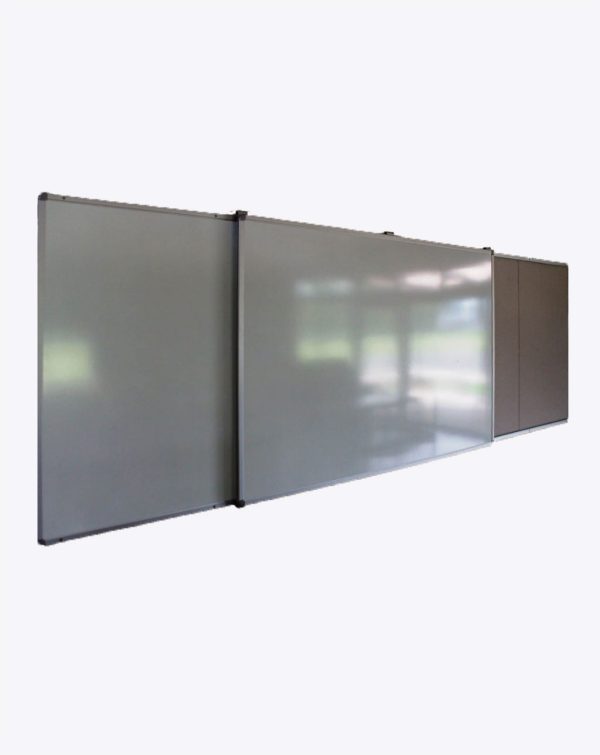
Sliding Whiteboards – Single, Double or Triple Sliders