
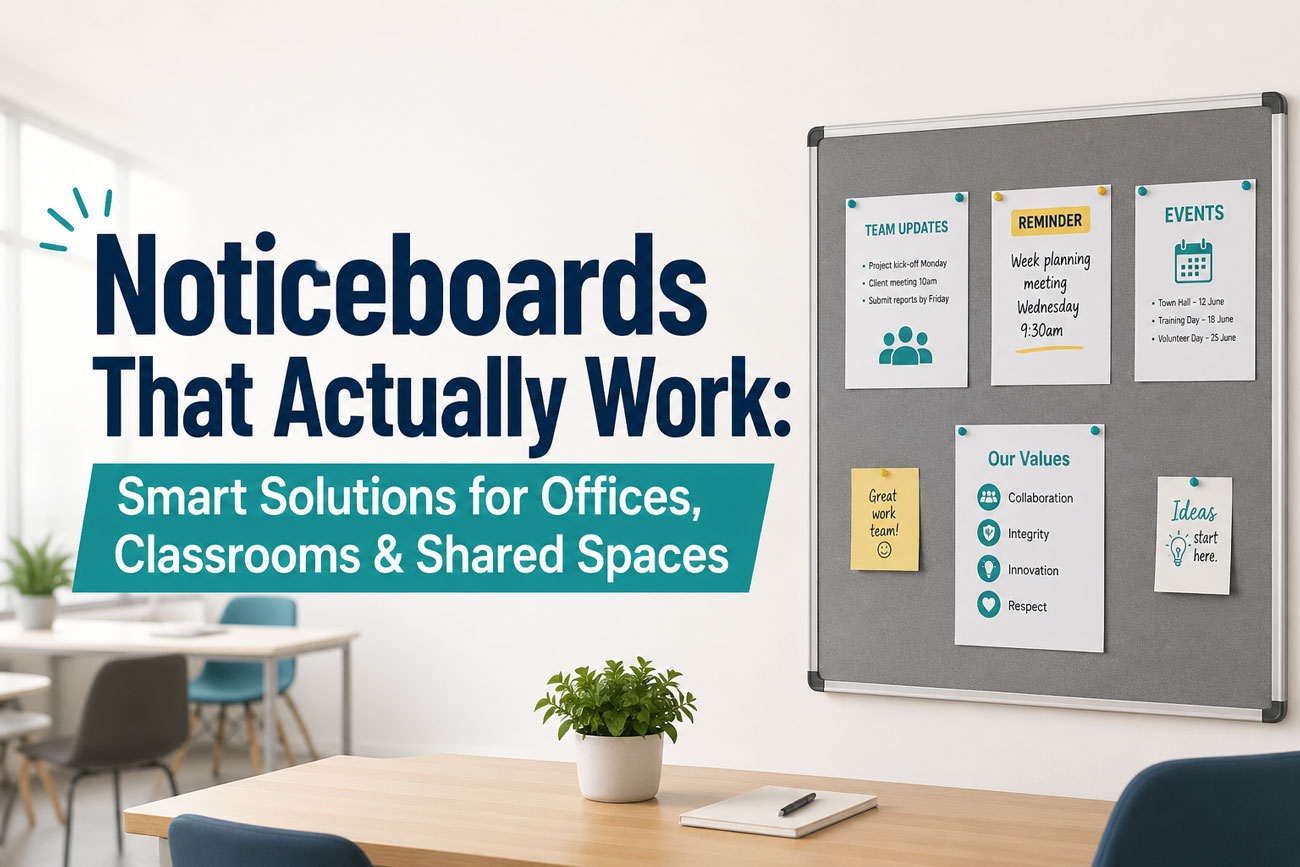
23 Apr Noticeboards That Actually Work: Smart Solutions for Offices, Classrooms & Shared Spaces
How can noticeboards and notice boards transform your school, office or community space?
Noticeboards remain one of the most practical and effective tools for communication across a wide range of environments, from a busy secondary school to a structured office or shared community space. A well-placed notice board becomes more than just a surface; it acts as a central display network where important messages, student work, and community content can be clearly presented and easily updated. Whether using cork, fabric, or a modern pinboard design, these boards help bring organisation to high-traffic areas, ensuring information is visible, accessible, and relevant. In both education and workplace settings, they support a more connected environment where communication flows naturally.
In today’s evolving spaces, the right noticeboards can elevate both function and presentation. From home offices needing simple organisation to larger warehouse or community environments requiring robust display solutions, selecting the right product makes a measurable difference. A quality noticeboard supports daily use without losing its structure, allowing users to pin, update, and manage content efficiently. For those looking to upgrade their space with reliable office products or education-focused solutions, exploring options through noticeboards provides a clear starting point to find a fit that balances durability, design, and long-term usability.
What types of noticeboards work best in schools and education settings?
Which noticeboard materials—cork, fabric or white—are best for a secondary school?
Selecting the right noticeboards for a secondary school environment comes down to how the board will be used day to day and the level of traffic it will handle. Cork noticeboards remain a practical and widely used product, offering a dependable pinboard surface that allows students and staff to pin and update content regularly. Fabric notice boards provide a more refined finish, often preferred in modern classrooms and shared spaces where presentation matters alongside function. White boards or combination noticeboards can also be effective where both written content and pinned material need to be displayed in a structured way.
In high-traffic school environments, durability is just as important as appearance. A noticeboard needs to withstand constant pin use, maintain its surface, and continue to support clear organisation of content. Cork and fabric surfaces typically perform best for frequent use, while white surfaces add versatility in mixed-use areas. For education-focused environments, exploring a range of noticeboards for schools helps ensure the board selected aligns with both the demands of the space and the expectations of a modern place of learning.
How can a noticeboard support student engagement and classroom display?
A well-placed noticeboard can significantly improve student engagement by creating a clear and consistent display of classroom content. Whether showcasing student work, important messages, or subject-based information, notice boards act as a visual anchor within the classroom. This helps reinforce learning by making key ideas visible and accessible throughout the day. In both primary and secondary school settings, noticeboards support a more interactive environment where students can see their contributions and stay connected to the wider classroom message.
Used effectively, noticeboards become part of the learning experience rather than just a static display. Rotating content keeps the board relevant, while structured layouts improve clarity and organisation. In busy classroom environments, a well-managed noticeboard ensures important information stands out without creating clutter. This makes it easier for students to absorb and engage with the material, supporting both individual learning and overall classroom communication.
Are online noticeboards useful for a place of learning or education service?
Online noticeboards have become an increasingly useful addition to traditional notice boards, especially in education environments where communication extends beyond the classroom. These digital tools allow schools and education services to share updates, resources, and community content quickly and efficiently. They are particularly effective for reaching students and parents outside of school hours, creating a broader display network that supports ongoing communication and organisation.
That said, physical noticeboards still play a vital role within the learning environment itself. A visible board in a classroom or shared space ensures messages are seen immediately and encourages interaction in a way digital platforms cannot fully replicate. Combining both approaches often delivers the best outcome, with traditional noticeboards supporting in-person engagement and online tools extending communication across the wider school community.
How do I choose the right noticeboard for high-traffic community and organisation spaces?
What size and display network suits a busy community centre or office?
Choosing the right size noticeboards for a busy community or office space starts with understanding how information flows through the environment. In high-traffic areas, larger boards create a central display network that allows multiple messages, notices, and community content to be viewed at once without overcrowding. A well-sized noticeboard ensures visibility from a distance, making it easier for people to engage with important updates as they move through the space. For offices, a structured board can support organisation and communication, while in a community centre it acts as a hub for shared information.
In practical terms, the layout of the space should guide the decision. Open areas often benefit from wide-format notice boards, while narrower corridors may require vertical designs that maximise wall space without obstructing movement. The goal is to create a clear and organised display that supports both quick viewing and ongoing engagement. A well-planned noticeboard setup reduces clutter and ensures each message has its place within the broader display network.
Should I use pinboard, white board or a combination in a high-traffic environment?
Selecting between a pinboard, white board, or a combination of both depends on how the noticeboard will be used within the space. Pinboards, particularly cork or fabric noticeboards, are ideal for environments where content is frequently updated and pinned, such as community spaces or shared office areas. They provide a simple and effective way to display notices, announcements, and printed material. White boards, on the other hand, are better suited for temporary messaging, allowing users to write and update information quickly without the need for pins.
A combination approach often delivers the best results in high-traffic environments. This allows a noticeboard to handle both pinned content and written updates, supporting a wider range of communication needs. In busy spaces, flexibility is key, and combining surfaces ensures the board remains useful across different situations. For those exploring versatile setups, reviewing options such as combination noticeboards can provide insight into how both functions can work together in a single, cohesive product.
How can the noticeboard product withstand wear in a warehouse or shared space?
In demanding environments such as a warehouse or shared community space, the durability of the noticeboard product becomes critical. High-traffic areas expose notice boards to constant use, physical contact, and environmental wear. Materials such as dense cork or heavy-duty fabric are often preferred for pinboards, as they maintain their structure despite repeated pinning. The frame and mounting system also play an important role, ensuring the board remains secure and stable over time, even in busy or industrial settings.
Long-term performance relies on selecting a noticeboard designed for resilience rather than occasional use. Reinforced backing, strong fixings, and quality surface materials all contribute to a product that can handle daily demands without deteriorating. In shared spaces where multiple users interact with the board, maintaining a clean and organised display is just as important as structural strength. A durable noticeboard supports both consistent use and clear communication, making it a reliable feature in any high-use environment.
-
 This product has multiple variants. The options may be chosen on the product page
Combination Whiteboard Noticeboard
Price range: $165.00 through $595.00 Excl GST -
Fabric Noticeboard with Pine Frame
$115.00 Excl GST

How can noticeboards be used to manage content and messages effectively?
What are best practices for organising community content and message prioritisation?
Effective use of noticeboards starts with clear organisation and a structured approach to displaying content. In a busy school, office, or community environment, grouping related notices together helps users quickly find relevant information. Dividing a noticeboard into sections—such as announcements, events, and important updates—creates a logical display network that improves readability. In high-traffic spaces, prioritising key messages at eye level ensures they are seen first, while less urgent content can be positioned around the edges. This approach supports both clarity and efficiency, especially in environments where information changes frequently.
Maintaining consistency is just as important as initial layout. Regularly updating the noticeboard, removing outdated material, and refreshing pinned content helps prevent clutter and keeps the board relevant. Using simple visual cues such as headings or colour-coded sections can further enhance organisation without overwhelming the display. A well-managed noticeboard not only improves communication but also reinforces a sense of structure within the space, making it easier for users to engage with the information presented.
How can notice boards integrate with online display or an office display network?
Modern notice boards can be part of a broader communication system that includes both physical and online elements. In an office or education setting, combining a traditional noticeboard with an online display network allows information to be shared across multiple platforms. Physical boards provide immediate visibility within a space, while online systems extend reach to those working remotely or outside the immediate environment. This integration ensures that important messages are accessible in more than one format, improving overall communication.
In practice, this means aligning the content displayed on noticeboards with digital updates to maintain consistency. A notice posted on a board in a shared office or community space can be mirrored online, ensuring everyone receives the same message. For organisations looking to balance traditional and modern communication methods, reviewing resources such as noticeboards in modern environments can provide useful insights into how both approaches can work together effectively.
What types of pins, fixings and accessories improve message longevity?
The choice of pins, fixings, and accessories plays a significant role in how well a noticeboard performs over time. In high-use environments, durable pins designed for repeated use help maintain the integrity of cork or fabric surfaces, preventing unnecessary wear. Strong fixings ensure the noticeboard remains securely mounted, particularly in high-traffic areas such as schools, warehouses, or shared community spaces. Accessories such as protective covers or structured display systems can also help preserve content and keep the board organised.
Selecting the right accessories contributes to both functionality and presentation. Using appropriate pins reduces damage to the board, while consistent placement techniques help maintain a clean and professional display. In environments where notices are frequently updated, having reliable tools makes the process quicker and more efficient. Over time, these small details make a noticeable difference, supporting a noticeboard that continues to perform effectively while keeping messages clear and easy to read.
What design and placement strategies make noticeboards actually get noticed?
Where should a noticeboard be placed to catch attention in an office or school?
The placement of noticeboards plays a decisive role in how effectively messages are seen and understood. In both office and school environments, positioning a notice board in high-traffic areas such as entrances, corridors, shared break spaces, or near key access points ensures maximum visibility. These locations naturally attract attention as people move through the space, making them ideal for displaying important notices, updates, and community content. In a place of learning, placing noticeboards near classrooms or communal areas allows students to engage with information as part of their daily routine.
Equally important is ensuring the noticeboard is positioned at an appropriate height and angle for easy viewing. A board that sits within the natural line of sight encourages interaction, while poor placement can result in messages being overlooked. In busy environments, clear access around the board is essential so users can stop, read, and engage without obstruction. Thoughtful placement transforms a simple noticeboard into an effective communication tool within the wider display network.
How does content layout and hierarchy increase visibility for important notices?
A well-structured content layout is essential for ensuring that noticeboards communicate effectively. Organising content using a clear hierarchy allows users to quickly identify what matters most. Important notices should be positioned centrally or at eye level, with supporting information arranged around them in a logical order. Grouping related messages together and using consistent spacing helps reduce clutter and improves readability, especially in high-traffic environments where people may only glance at the board.
Strong visual organisation also enhances engagement. Using headings, sections, or subtle colour contrasts can guide the viewer’s attention without overwhelming the display. Keeping the layout clean and avoiding overcrowding ensures each message has space to stand out. For those looking to refine how content is presented, exploring insights such as modern noticeboard strategies can highlight how thoughtful layout and hierarchy improve communication in both office and education settings.
Can visual design and environment-friendly materials improve engagement?
Visual design plays a key role in how noticeboards are perceived and used within a space. A well-designed board that complements its environment can significantly improve engagement, making users more likely to interact with the content displayed. Materials such as fabric or cork provide a softer, more inviting appearance, while clean white surfaces offer a modern and structured look. Matching the noticeboard design to the surrounding environment—whether it’s a professional office or a dynamic school setting—helps create a cohesive and appealing display.
Material choice also influences long-term usability and sustainability. Environment-friendly materials and durable surfaces ensure the noticeboard remains functional while supporting responsible product selection. In spaces where organisation and communication are priorities, a thoughtfully designed noticeboard enhances both presentation and performance. When combined with clear messaging and effective placement, the right design approach turns a standard board into an engaging and reliable part of the overall display network.
-
Fabric Noticeboard with Wrapped Edge
$55.00 Excl GST -
 This product has multiple variants. The options may be chosen on the product page
Mobile Noticeboard – Room Divider
$428.00 Excl GST

Where can I buy or source noticeboards and related office products?
What should I look for from a noticeboard shop or service when buying for community use?
When sourcing noticeboards for community use, the focus should be on reliability, durability, and the ability to support ongoing content updates. A quality product needs to perform consistently in high-traffic environments where multiple users interact with the board daily. Materials such as cork and fabric are often preferred for pinboard use, allowing notices and community content to be displayed and replaced without damaging the surface. A good shop or service should offer a clear range of notice boards suited to different environments, from schools and offices to shared public spaces.
Equally important is the level of guidance and support available when selecting the right noticeboard. Understanding the intended use, placement, and frequency of updates helps ensure the product meets long-term expectations. Suppliers such as noticeboards for community and office use provide structured options that align with different environments, making it easier to choose a board that supports both organisation and effective communication across a display network.
Are there cost-effective noticeboard products for home, classroom and organisation spaces?
Cost-effective noticeboards are available across a wide range of environments, from home offices to classrooms and larger organisation spaces. The key is selecting a product that balances affordability with durability, ensuring it remains functional over time. For home use, smaller cork or fabric noticeboards provide a simple way to manage reminders, messages, and personal organisation. In classrooms, larger boards are often required to support student work and structured display, making durability a priority over the lowest initial cost.
In organisation or office environments, investing in a slightly higher-quality noticeboard often leads to better long-term value. A board that maintains its surface and structure under frequent use reduces the need for replacement and supports a more professional display. Choosing the right product for the intended space ensures that cost savings do not come at the expense of performance, particularly in high-use areas where reliability is essential.
How do warranty, installation and maintenance options vary between suppliers?
Warranty, installation, and maintenance are important factors that can vary significantly between suppliers of noticeboards and office products. A strong warranty often reflects confidence in the product’s durability, particularly for notice boards used in high-traffic environments such as schools, warehouses, or shared community spaces. Installation options also play a role, as secure mounting ensures the board remains stable and safe over time, especially in busy areas where it may be subject to regular use.
Maintenance requirements should also be considered when comparing options. Some noticeboards are designed for minimal upkeep, while others may require more frequent attention to maintain their appearance and functionality. Understanding these differences helps ensure the chosen product aligns with the demands of the environment. A well-supported noticeboard with reliable installation and long-term maintenance considerations contributes to a consistent and effective display system that supports communication across any space.
Conclusion
A well-chosen noticeboard can do far more than hold a simple notice—it becomes a central point for communication, organisation, and engagement across any school, office, or community environment. Whether used as a pinboard for daily messages, a fabric display for structured content, or a cork surface for high-traffic use, the right product supports clarity and consistency. From classrooms and secondary school settings to warehouse operations and shared office spaces, notice boards help manage information in a way that is visible, practical, and easy to maintain. Selecting the right size, material, and placement ensures that every message contributes to a more organised and effective display network.
Choosing the right solution is about understanding how your space operates and how people interact with information. A durable noticeboard that suits your environment will support long-term use while keeping community content clear and accessible. If you are looking to upgrade your current setup or introduce a more effective system, explore the full range of options available through 3D products. With a focus on quality office products and reliable noticeboards, you can create a display solution that performs consistently and enhances communication across any environment.
-
 This product has multiple variants. The options may be chosen on the product page
Round Noticeboard with Wrapped Edge
Price range: $160.00 through $240.00 Excl GST -
Velcro Noticeboard
$98.00 Excl GST
