
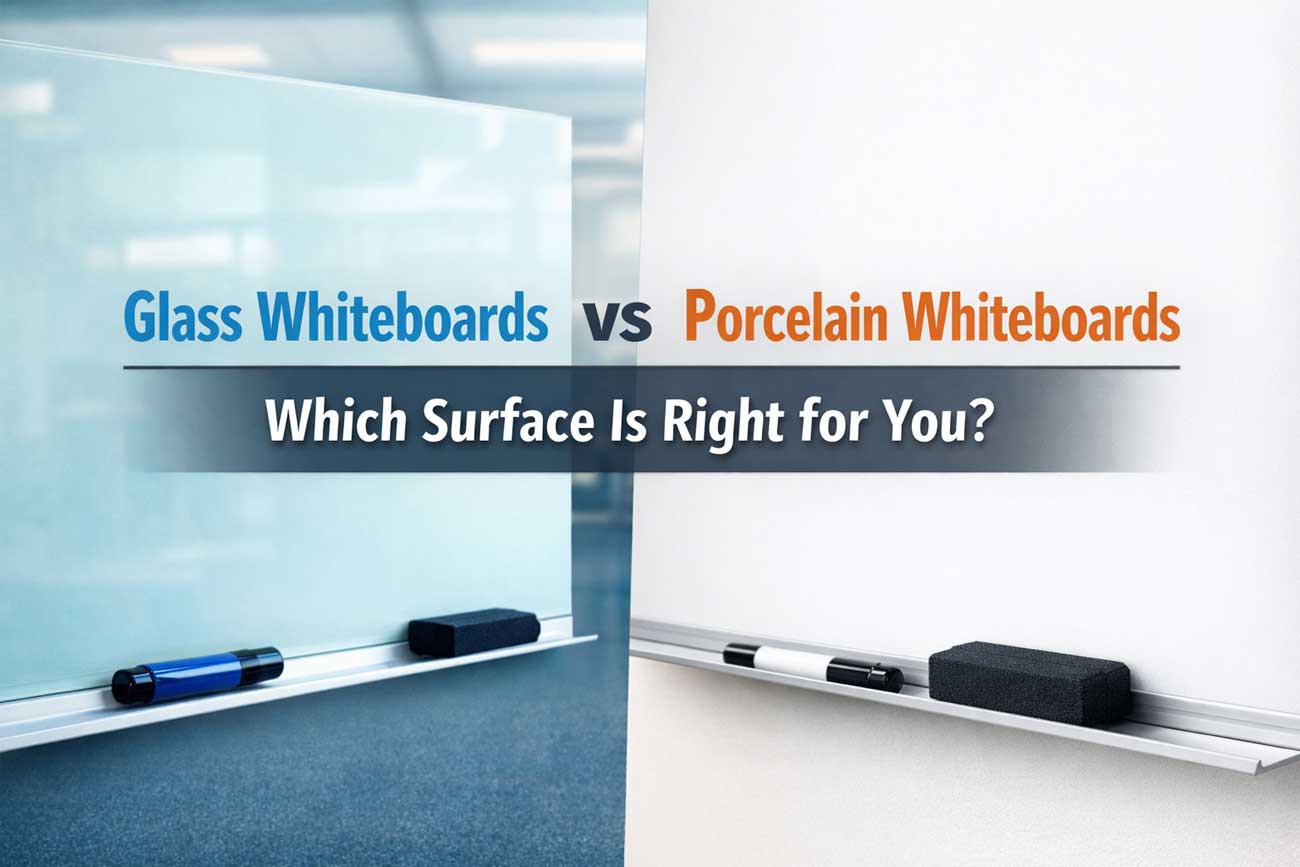
23 Mar Glass Whiteboards vs Porcelain Whiteboards: Which Surface Is Right for You?
Glass Whiteboards vs Porcelain Whiteboards: Which whiteboard surface is best for your space?
Choosing between glass whiteboards and porcelain whiteboards comes down to performance, durability and how the whiteboard surface will be used in your space. Glass whiteboards are made with tempered safety glass, offering a smooth glass surface that is completely non-porous. This means they resist staining and ghost marks exceptionally well, even in busy office settings or conference rooms. A glass board also provides a sleek, modern finish that suits contemporary environments, while magnetic glass options allow for visual displays and flexible communication. In comparison, porcelain whiteboards feature a durable porcelain surface bonded to a steel backing, delivering a strong writing surface that is ideal for heavy use. Their magnetic capability and long-term erasability make them one of the best performing options in the whiteboard market.
Each type of whiteboard has distinct advantages depending on the environment and level of use. Porcelain boards are heavier and built for longevity, with a smooth porcelain surface that erases clean every time and stands up well to frequent use without denting or wearing down. Glass whiteboards offer a premium aesthetic and are highly resistant to scratches, though they are often considered more expensive whiteboard materials. Compared to melamine whiteboards or painted steel whiteboards, both glass and porcelain whiteboards provide superior durability and reduced ghosting over time. For those looking to find the best fit across different types of whiteboards, exploring a full range of options through quality whiteboards and solutions helps ensure the best choice for your space, whether prioritising design, longevity or overall performance.
What are the main differences between glass whiteboards and porcelain whiteboards?
How does a glass surface compare to a porcelain surface for writing and erasing?
Glass whiteboards and porcelain whiteboards differ significantly in how their writing surface performs during daily use. A glass whiteboard is made with tempered safety glass, creating a smooth glass surface that is completely non-porous. This allows dry erase marker ink to sit cleanly on top of the surface, making it easy to erase without leaving residue, ghost marks or staining. Glassboards are often chosen for modern office settings and conference rooms because they maintain a clean appearance even after repeated use. The smooth glass surface provides a consistent writing experience, though some users find it slightly more slippery compared to traditional whiteboards.
Porcelain whiteboards, on the other hand, feature a porcelain enamel coating fused onto a steel backing, offering a slightly softer writing feel. The smooth porcelain surface still delivers excellent erasability, with the ability to erase clean every time when maintained properly. While porcelain is not as glossy as glass, it offers strong visibility and reduced glare under certain lighting conditions. Compared to melamine whiteboards or painted steel boards, both glass and porcelain whiteboard surface materials perform at a much higher level, making them among the best whiteboard materials available today.
Are glassboards or porcelain boards more durable and long-lasting?
Durability is one of the key differences when comparing glassboards and porcelain boards. Glass whiteboards are highly resistant to scratches due to their tempered glass construction, and glass is heat-treated to increase strength and longevity. The thickness of the glass and its non-porous surface ensure it does not absorb ink, which helps maintain a pristine finish over time. However, while glass is extremely durable in terms of surface wear, it can be more vulnerable to impact damage if struck with force, particularly in busy environments.
Porcelain whiteboards are widely recognised for their long-term durability, especially in high use environments such as classrooms and commercial offices. The porcelain surface is fused to a steel board, making it resistant to denting and structural damage. Porcelain boards are heavier, but this weight contributes to their strength and stability. They are ideal for heavy use, offering excellent longevity and performance even after years of writing and erasing. For those evaluating glass whiteboard options, it is important to weigh surface durability against structural resilience when choosing the best fit.
Which type of whiteboard is more prone to stains, ghosting, or denting?
When it comes to staining and ghosting, glass whiteboards offer the highest level of resistance. Because glass is non-porous, marker ink does not penetrate the surface, meaning staining and ghost marks are virtually eliminated. Even permanent marker can often be removed more easily from a glass board compared to other types of whiteboards. This makes glass whiteboards an excellent choice for environments where cleanliness and presentation are critical, such as boardrooms or collaborative workspaces.
Porcelain whiteboards also perform very well in resisting staining and ghosting, though not to the same extent as glass. The porcelain enamel coating creates a non-porous surface that significantly reduces ink absorption, but over time, some minor residue can appear if the board is not cleaned regularly. In terms of denting, porcelain boards outperform glassboards due to their steel backing, which prevents structural damage from impact. Compared to melamine boards or painted steel whiteboards, both glass and porcelain whiteboards are far more durable and resistant to staining, making them the best choice for long-term performance across different types of whiteboards.
Which whiteboard materials are best for heavy daily use in conference rooms?
Are porcelain whiteboards the most durable option for frequent dry erase use?
Glass whiteboards are another strong contender for high-use environments, offering a completely non-porous glass surface that resists staining and ghosting exceptionally well. Made with tempered glass, these whiteboards are heat-treated to increase strength and durability, making them suitable for daily use in conference rooms. Because glass is non-porous, marker ink sits on the surface rather than being absorbed, allowing for effortless cleaning and a consistently pristine finish. This makes glass whiteboards particularly appealing for spaces where visual clarity and cleanliness are essential.
Over time, glass whiteboards offer excellent resistance to wear caused by frequent cleaning. Unlike traditional whiteboards or melamine boards, they do not degrade or lose their erasability. However, while glassboards excel in maintaining a spotless appearance, they can be more susceptible to impact damage compared to steel-backed porcelain boards. Choosing a glass whiteboard often comes down to prioritising a modern aesthetic and easy maintenance, especially in conference rooms where presentation and visual impact matter as much as functionality.
Can tempered glass whiteboard surfaces handle daily markers and cleaning without staining?
Painted steel whiteboards and magnetic glass boards both serve a purpose in collaborative office spaces, but they differ in performance and durability. Painted steel whiteboards are more affordable and provide a magnetic surface, allowing users to attach documents or notes during meetings. However, compared to porcelain or glass whiteboards, painted steel boards are more prone to staining and ghosting over time. Their coating can wear down with frequent use, which impacts the overall erasability of the board and reduces long-term performance.
Magnetic glass boards, on the other hand, combine the durability of tempered glass with the added functionality of a magnetic surface. While typically non-magnetic unless specially designed, magnetic glass whiteboards offer a sleek and modern alternative that performs well in collaborative environments. They provide a clean writing surface, resist staining, and maintain their appearance over time. When comparing different types of whiteboards, organisations often find that glass and porcelain whiteboards deliver the best balance of durability, aesthetics, and functionality, making them the best choice for professional office settings where collaboration is a priority.
Are painted steel or magnetic glass boards better for collaborative office spaces?
Painted steel whiteboards and magnetic glass boards both serve a purpose in collaborative office spaces, but they differ in performance and durability. Painted steel whiteboards are more affordable and provide a magnetic surface, allowing users to attach documents or notes during meetings. However, compared to porcelain or glass whiteboards, painted steel boards are more prone to staining and ghosting over time. Their coating can wear down with frequent use, which impacts the overall erasability of the board and reduces long-term performance.
Magnetic glass boards, on the other hand, combine the durability of tempered glass with the added functionality of a magnetic surface. While typically non-magnetic unless specially designed, magnetic glass whiteboards offer a sleek and modern alternative that performs well in collaborative environments. They provide a clean writing surface, resist staining, and maintain their appearance over time. When comparing different types of whiteboards, organisations often find that glass and porcelain whiteboards deliver the best balance of durability, aesthetics, and functionality, making them the best choice for professional office settings where collaboration is a priority.
-
 This product has multiple variants. The options may be chosen on the product page
Glass Whiteboard
Price range: $506.00 through $945.00 Excl GST -
Magnetic Whiteboard Porcelain Steel, Aluminium Frame
$79.00 Excl GST

How do melamine whiteboards compare to glass and porcelain options?
What is a melamine board and how does its durability stack up?
A melamine board is one of the most common types of traditional whiteboards, typically constructed from a particleboard core with a thin melamine coating forming the whiteboard surface. This surface is designed for dry erase use, but unlike porcelain whiteboards or glass whiteboards, it is not non-porous. As a result, marker ink can gradually penetrate the surface, leading to staining and ghost marks over time. While melamine whiteboards are lightweight and widely used, they are generally considered less durable than higher-end whiteboard materials such as porcelain or tempered glass.
In terms of durability, melamine boards are better suited to light or occasional use rather than heavy daily use in conference rooms. The surface can wear down with repeated cleaning, and the risk of denting is higher due to the softer core material. Compared to porcelain boards with a steel backing or glassboards made with tempered safety glass, melamine whiteboards offer shorter longevity. For those assessing different types of whiteboards, melamine represents an entry-level option that prioritises affordability over long-term performance.
When is a melamine whiteboard a cost-effective choice despite staining risks?
Melamine whiteboards can be a cost-effective choice in environments where budget constraints are a priority and usage is relatively low. In settings such as small offices, home workspaces, or temporary installations, a melamine board provides a functional dry erase board without the higher investment required for porcelain or glass whiteboard options. This makes them appealing when the goal is to find the best fit for short-term or occasional use rather than long-term durability.
Despite the risk of staining and ghosting, melamine boards can perform adequately when properly maintained. Regular cleaning and the use of quality whiteboard markers can help extend the lifespan of the surface. However, when compared to glass and porcelain whiteboards, which resist staining and maintain a clean writing surface for much longer, melamine whiteboards require more frequent upkeep. They are often chosen as a practical solution where cost outweighs the need for premium durability or long-lasting performance.
How does the writing surface and erase performance of melamine whiteboards differ from glass?
The writing surface of melamine whiteboards differs significantly from that of glass whiteboards. Melamine boards have a softer, more absorbent surface, which can affect how smoothly markers glide across the board. Over time, this absorbency leads to a decline in erasability, with dry erase marker residue becoming more difficult to remove. This can result in visible ghosting and staining, especially in high-use environments where the board is wiped frequently.
Glass whiteboards, by contrast, offer a completely non-porous glass surface that delivers superior erase performance. The smooth glass surface provides a consistent writing experience and allows marker ink to be wiped away cleanly without leaving residue. This makes glassboards ideal for conference rooms and professional office settings where presentation quality matters. When comparing melamine to glass or porcelain or glass options, the difference in writing clarity, ease of cleaning, and long-term performance is significant, making glass whiteboards a better choice for demanding environments.
Do glass whiteboards or porcelain whiteboards offer magnetic functionality?
Are glassboards available in magnetic versions and how do they work?
Glass whiteboards are typically non-magnetic by default due to the nature of tempered glass, which does not allow magnets to adhere directly to the surface. However, magnetic glass whiteboards are available and are specifically engineered with a steel backing positioned behind the glass panel. This backing allows magnets to function through the glass, although stronger magnets are usually required due to the thickness of the glass surface. These types of glassboards combine the sleek appearance of a glass whiteboard with added functionality, making them suitable for modern office settings and conference rooms.
The performance of magnetic glass boards depends on their construction. Since glass is non-porous and highly resistant to staining and ghosting, it offers excellent durability and a clean writing surface. At the same time, the added magnetic feature provides flexibility for displaying notes or documents. For users comparing different types of whiteboards, magnetic glass options offer a balance between aesthetics and functionality, though they may not match the magnetic strength of traditional steel-backed whiteboards.
Do porcelain boards typically include a steel backing for magnets?
Porcelain whiteboards almost always include a steel backing, which makes them inherently magnetic. The porcelain enamel surface is fused onto this steel core, creating a durable and highly functional whiteboard surface that supports both writing and magnet use. This construction allows standard magnets to adhere easily, making porcelain boards a practical choice for environments where both writing and display are required, such as classrooms and collaborative office spaces.
Beyond magnetic functionality, porcelain boards are valued for their durability and longevity. The steel backing not only supports magnets but also reinforces the structure of the board, preventing denting and enhancing stability. Combined with a smooth porcelain surface that resists staining and ghosting, porcelain whiteboards provide a reliable solution for heavy use. When comparing porcelain or glass whiteboards, the integrated magnetic capability of porcelain boards often makes them a more versatile option for everyday use.
Which magnetic whiteboard option is better for mounting notes in classrooms or offices?
When choosing a magnetic whiteboard for mounting notes, the decision often comes down to practicality and usage requirements. Porcelain whiteboards are generally the preferred option due to their strong magnetic performance, supported by the steel backing beneath the porcelain surface. This allows standard magnets to hold documents securely, making them ideal for classrooms, meeting rooms, and office environments where materials need to be displayed regularly.
Magnetic glass whiteboards, while visually appealing, require specialised magnets and may not provide the same level of grip as porcelain boards. They are better suited to spaces where design and presentation take priority, and where lighter materials are being displayed. For organisations looking to find the best fit for functionality and durability, porcelain whiteboards tend to offer the best balance, delivering reliable magnetic strength alongside a durable, non-porous writing surface that performs consistently over time.
-
 This product has multiple variants. The options may be chosen on the product page
Glassboard Black
Price range: $506.00 through $742.00 Excl GST -
 This product has multiple variants. The options may be chosen on the product page
Hinged Whiteboard
Price range: $345.00 through $423.00 Excl GST
What maintenance and cleaning are required for glass vs porcelain whiteboard surfaces?
How do you remove stains and ghosting from porcelain whiteboards effectively?
Removing stains and ghosting from porcelain whiteboards is relatively straightforward due to the non-porous porcelain surface. Porcelain whiteboards are designed to resist staining and ghost marks, but over time, residue from dry erase marker use can build up if not cleaned properly. A standard whiteboard cleaner or mild solution can be used to wipe the surface clean, restoring clarity and ensuring the board continues to erase effectively. Because the surface is fused onto a steel backing, it maintains its durability even with frequent cleaning.
For more stubborn stains, a slightly stronger cleaning approach may be required, but porcelain boards are resilient enough to handle this without damage. Regular cleaning helps maintain the smooth porcelain surface and prevents long-term buildup that could affect writing performance. Compared to melamine whiteboards or painted steel boards, porcelain offers significantly better resistance to staining and ghosting, making it one of the best performing whiteboard materials for professional use.
What cleaners are safe for tempered glass whiteboard surfaces to prevent damage?
Removing stains and ghosting from porcelain whiteboards is relatively straightforward due to the non-porous porcelain surface. Porcelain whiteboards are designed to resist staining and ghost marks, but over time, residue from dry erase marker use can build up if not cleaned properly. A standard whiteboard cleaner or mild solution can be used to wipe the surface clean, restoring clarity and ensuring the board continues to erase effectively. Because the surface is fused onto a steel backing, it maintains its durability even with frequent cleaning.
For more stubborn stains, a slightly stronger cleaning approach may be required, but porcelain boards are resilient enough to handle this without damage. Regular cleaning helps maintain the smooth porcelain surface and prevents long-term buildup that could affect writing performance. Compared to melamine whiteboards or painted steel boards, porcelain offers significantly better resistance to staining and ghosting, making it one of the best performing whiteboard materials for professional use.
How does routine maintenance affect the longevity of different types of whiteboards?
Tempered glass whiteboard surfaces require a different cleaning approach due to their smooth, non-porous glass surface. Standard glass cleaners are typically safe to use, as glass is resistant to most cleaning products and does not absorb chemicals. This makes glass whiteboards easy to maintain, as marker residue can be wiped away without leaving stains or ghosting. The durability of tempered safety glass ensures that frequent cleaning does not degrade the surface, even in high-use environments such as conference rooms.
Although glass whiteboards are highly durable, it is still important to avoid abrasive materials that could scratch the surface. Soft cloths and appropriate cleaning solutions help preserve the smooth writing surface and maintain visual clarity. For those exploring whiteboard options, glassboards stand out for their low-maintenance requirements and consistent performance, particularly in spaces where presentation quality and cleanliness are essential.
How should you choose the right whiteboard surface for your budget and needs?
What factors determine whether to choose glass, porcelain, painted steel, or melamine?
Choosing the right whiteboard surface depends on a combination of performance requirements, budget, and how the whiteboard will be used day to day. Glass whiteboards and porcelain whiteboards are often considered the best whiteboard materials due to their durability, non-porous surface, and resistance to staining and ghosting. Glassboards, made with tempered glass, offer a sleek and modern finish, while porcelain boards provide a slightly softer writing experience with strong structural support from a steel backing. Painted steel and melamine whiteboards, by contrast, are more traditional whiteboards that are typically chosen for their lower cost.
Each type of whiteboard brings different strengths to the table. Glass whiteboards are ideal where aesthetics and easy cleaning are priorities, while porcelain whiteboards excel in high-use environments where durability matters most. Painted steel boards provide a mid-range option with magnetic functionality, and melamine boards offer an entry-level solution for light use. Understanding how whiteboards are made and how each whiteboard surface performs helps narrow down the best fit for specific environments and expectations.
How do cost, durability, and intended use influence the best whiteboard materials?
Cost is often one of the first considerations when selecting between different types of whiteboards, but it should be balanced against durability and long-term value. Melamine whiteboards are typically the most affordable option, making them suitable for low-use environments or temporary setups. However, they are less durable and more prone to staining and ghosting, which can affect their lifespan. Painted steel whiteboards offer improved durability and magnetic functionality, but still fall short when compared to porcelain or glass whiteboards in terms of longevity.
For environments that demand consistent performance, such as conference rooms or classrooms, investing in porcelain or glass whiteboard options often proves more cost-effective over time. These materials are designed for heavy use, with non-porous surfaces that maintain a clean writing area and resist wear. While they may be more expensive initially, their extended lifespan and reduced maintenance requirements make them the best choice for long-term use. Matching the intended use with the right material ensures that the whiteboard continues to perform as expected without frequent replacement.
Which whiteboard options are recommended for classrooms, conference rooms, and home offices?
Different environments require different whiteboard solutions, and selecting the right option ensures optimal performance. In classrooms, porcelain whiteboards are often recommended due to their durability and ability to withstand heavy daily use. Their magnetic surface allows teachers to display materials easily, while the smooth porcelain surface ensures reliable erasability. In conference rooms, glass whiteboards are increasingly popular for their modern appearance and ability to maintain a clean, professional look during presentations.
For home offices, the choice often depends on budget and frequency of use. Melamine whiteboards can be a practical option for occasional use, while painted steel boards offer a balance between affordability and functionality. Those seeking a premium solution may still opt for glass or porcelain whiteboards, particularly when aesthetics and long-term performance are important. Exploring a full range of whiteboard options helps identify the best fit for each space, ensuring the right combination of durability, usability, and value.
Conclusion
Choosing between different types of whiteboards ultimately comes down to how the whiteboard surface will be used, how often it will be cleaned, and the level of durability required. Glass whiteboards and porcelain whiteboards stand out as the best whiteboard materials for long-term performance, offering a non-porous surface that resists stain, ghosting, and wear. While melamine whiteboards and painted steel options can suit tighter budgets, they often require more maintenance and may not deliver the same longevity. Understanding how whiteboards are made, from tempered glass to porcelain enamel with steel backing, allows you to find the best fit for your space, whether it’s a home office, classroom, or conference room.
Taking the time to compare glass and porcelain whiteboards with other whiteboard options ensures you make a practical, long-term investment rather than a short-term fix. A smooth writing surface, reliable dry erase performance, and strong magnetic functionality all contribute to a better overall experience. If you’re ready to upgrade your setup or find the best whiteboard for your needs, explore the full range available through 3D products, where quality whiteboards are designed to deliver durability, performance, and a clean, professional finish across a wide range of environments.
-
 This product has multiple variants. The options may be chosen on the product page
Executive Folding Whiteboard
Price range: $550.00 through $896.00 Excl GST -
 This product has multiple variants. The options may be chosen on the product page
Mobile Whiteboard Trolley
Price range: $448.00 through $1,059.00 Excl GST